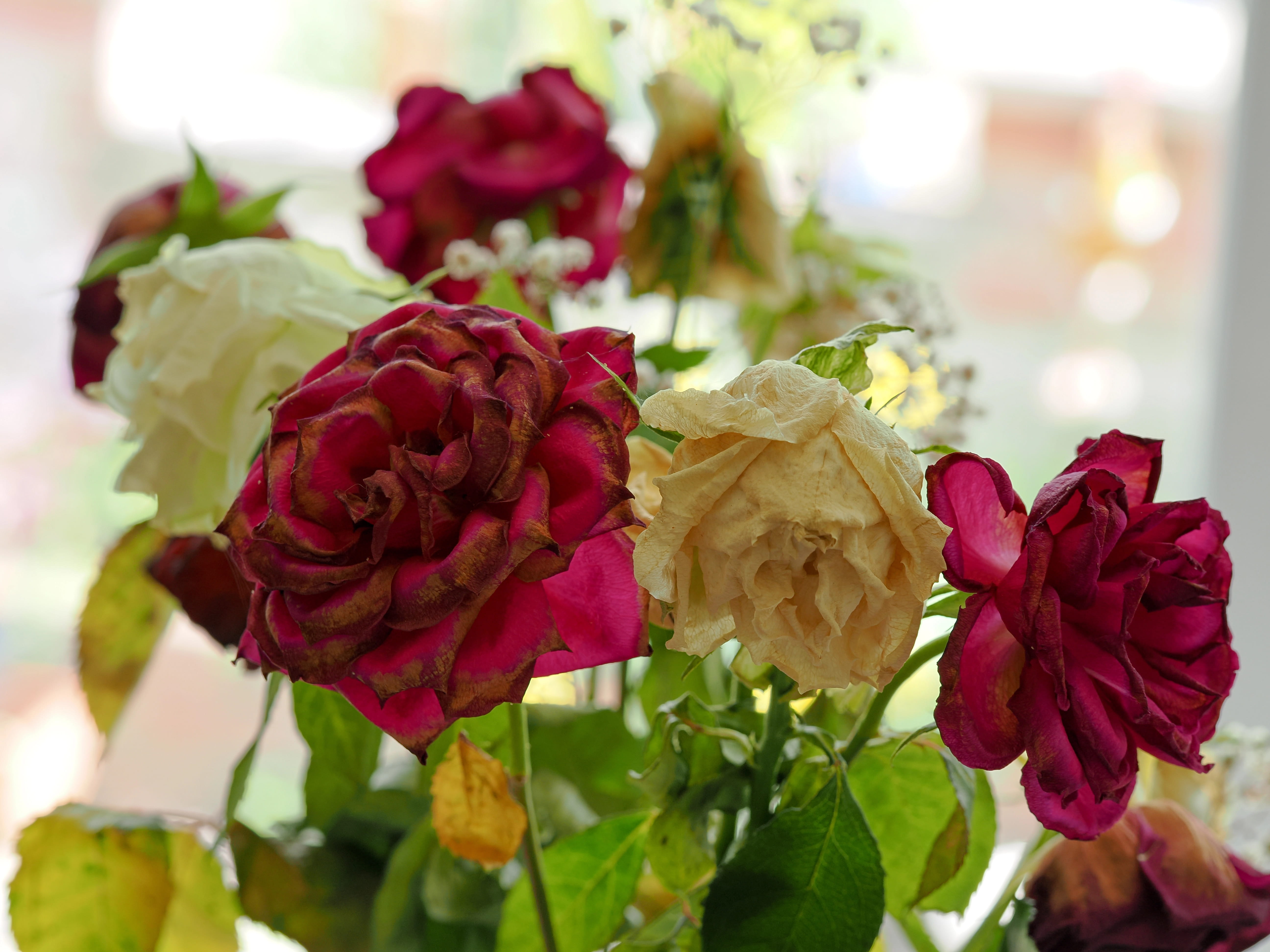
There is a brief moment of disappointment when you look at a beautiful bouquet and notice a heavy-headed rose or a drooping tulip. However, a wilted flower is often just a thirsty one, not a dead one. At Dottie’s Flowers, we want your arrangements to last as long as possible. In many cases, flowers "faint" because of air bubbles in their stems or a lack of water tension.
Before you give up on your blossoms, try these professional techniques to restore their turgidity and bring that vibrant, upright look back to your vase.
1. The Deep Trim and Warm Water Reset
The most common cause of wilting is a "scab" that forms at the bottom of the stem, preventing water from traveling upward.
- The Technique: Remove the wilted stems from the arrangement. Using sharp, clean shears, cut at least one inch off the bottom at a 45-degree angle. This angle provides more surface area for the flower to drink. Immediately place the stems into a clean vase filled with lukewarm water.
- Why it Works: Warm water molecules move faster than cold ones, making it easier for a dehydrated flower to absorb moisture quickly. The fresh cut removes any air blockages that were stalling the hydration process.
2. The "Quick Dip" Boiling Water Method
For flowers with woody or sturdy stems, like hydrangeas, lilacs, or roses, a more drastic measure can often work wonders.
- The Technique: After giving the stems a fresh angled cut, very carefully place the bottom inch of the stems into about an inch of boiling water in a shallow pan for approximately 30 seconds. Protect the delicate flower heads from the rising steam by wrapping them loosely in a towel. After 30 seconds, move them immediately into a vase of room-temperature water.
- Why it Works: The extreme heat helps to break up sap or air clogs in the stem that room-temperature water cannot penetrate. It acts as a "jump start" for the flower's circulatory system.
3. The Full Submersion Bath for Hydrangeas
Hydrangeas are famous for their dramatic wilting. This is because they actually "drink" through their petals as much as their stems.
- The Technique: If a hydrangea head is looking limp, submerge the entire flower head-down in a bowl or sink of cool water for 30 to 45 minutes.
- Why it Works: This allows the petals to rehydrate directly through their surface. Once you take them out and give the stem a fresh cut, you will often find the "mophead" looks as crisp as the day it arrived.
4. Remove Excess Foliage
Sometimes a flower is wilting because it is trying to send energy and water to too many places at once.
- The Strategy: Strip away any leaves that fall below the waterline of the vase, as well as any leaves higher up that look yellow or damaged.
- Why it Works: By removing unnecessary foliage, you ensure that every drop of water the stem pulls up goes directly to the flower head where it is needed most. This also prevents bacteria growth in the water, which is a leading cause of premature wilting.
5. Environmental Adjustments
Sometimes the flower isn't the problem; the room is. Flowers are sensitive to their surroundings in ways we often overlook.
- The Strategy: Move your arrangement away from direct sunlight, drafty windows, or ripening fruit.
- Why it Works: Direct sun and drafts cause rapid evaporation from the petals. Furthermore, ripening fruit (especially apples and bananas) releases ethylene gas, which acts as a ripening hormone for flowers and causes them to wilt and drop their petals much faster than they naturally would.
When to Know It's Time to Say Goodbye
While these tips can perform minor miracles, every flower has a natural lifespan. If the petals are turning brown and crispy at the edges, or if the stem feels mushy or slimy despite a fresh cut, the flower has likely reached the end of its journey. At that point, it is best to remove the spent blooms so they do not spread bacteria to the remaining healthy flowers in the arrangement.
Keeping Dottie's Flowers Fresh
At Dottie’s Flowers, we source our blooms with a focus on freshness and longevity, but a little home care goes a long way. By checking your water levels daily and using these flower revival techniques at the first sign of a droop, you can extend the life of your 2026 bouquets and enjoy their beauty for days to come. Contact Dottie’s Flowers to find out more today!